Bangladesh’s healthcare sector has expanded rapidly over the past decade, and hospital bed demand has grown right alongside it. New hospitals, expanding clinics, and a fast-growing home healthcare market all mean more buyers are shopping for hospital beds in Bangladesh than ever before — and more manufacturers, both local and imported, competing for that business.
The problem most buyers run into isn’t a shortage of options; it’s the opposite. Price ranges vary wildly, feature sets overlap in confusing ways, and it’s not always obvious which specification actually matters for a given ward versus which is just marketing language. This guide breaks down what to actually look for when choosing hospital beds in Bangladesh in 2026, so the decision comes down to fit and quality rather than guesswork.
Why the Right Hospital Bed Choice Matters
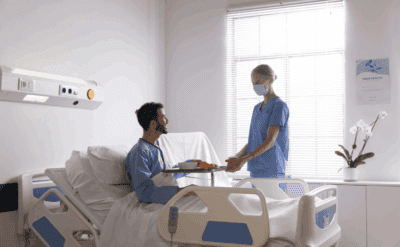
A hospital bed isn’t a piece of furniture that sits quietly in the background of patient care — it’s actively involved in it. The right bed reduces the physical strain on nursing staff during repositioning and transfers, lowers the risk of pressure injuries during long admissions, and directly affects how quickly and safely a patient can be moved during an emergency. The wrong bed, or the wrong bed for a given ward, creates friction and risk that shows up in daily operations long after the purchase decision is forgotten.
For hospital administrators, this makes bed selection a clinical decision as much as a procurement one.
Types of Hospital Beds Available in Bangladesh
Manual Beds
Manual hospital beds use hand cranks to adjust head and foot sections. They’re the most affordable category and remain a practical choice for general wards, home care, and lower-acuity settings where frequent, rapid adjustment isn’t a constant requirement. Their simplicity is also their strength — fewer moving electronic parts mean fewer things that can break down.
Semi-Electric Beds
Semi-electric beds combine electric height or backrest adjustment with a manual crank for other functions. They strike a middle ground between cost and convenience, and are common in private clinic rooms and mid-acuity hospital wards where some — but not full — motorized function is needed.
Full-Electric and Multi-Function Beds
Full-electric beds allow height, head, and foot adjustments via remote or control panel, with no manual cranking required. Multi-function electric beds often add features like Trendelenburg positioning, CPR quick-release mechanisms, and side-rail controls. These are increasingly the standard for general hospital wards where staff need to adjust a bed quickly without physically operating a crank at the bedside.
ICU and Critical Care Beds
ICU-grade beds sit at the top of the category, built for patients who cannot reposition themselves and need continuous, precise adjustment. These typically include electric multi-function positioning, integrated weighing scales, CPR release, X-ray compatibility, and higher weight capacities, along with more rigorous build quality to support extended, uninterrupted use.
What to Actually Look for When Buying
Frame quality and weld construction. A hospital bed’s frame absorbs constant load-bearing stress over years of use. Mild steel with proper welded joints — not just bolted assemblies — tends to hold up far better under the repeated adjustment cycles a busy ward puts a bed through.
Motor and mechanism reliability (for electric beds). Duty cycle matters more than most buyers realize. A motor that needs to “rest” after a handful of adjustments will become a bottleneck in a busy ward. Ask suppliers directly about duty cycle ratings rather than assuming all electric motors perform the same.
Mattress compatibility and inclusion. Bed price quotes don’t always include a mattress, and mattress quality has a direct impact on pressure-injury prevention. Always clarify whether a quoted price includes the mattress, side rails, and IV pole — these are commonly sold as add-ons and can significantly change the real cost.
Side rails and safety mechanisms. Foldable, lockable side rails are a baseline safety requirement, particularly for elderly, sedated, or post-surgical patients at risk of falls.
Wheel and locking quality. Casters need to move smoothly for transport but lock securely and reliably during use. Cheaper wheel assemblies are one of the most common early failure points on lower-cost beds.
Warranty and after-sales support. A slightly higher upfront price with a genuine warranty and responsive local service support is usually more cost-effective over a bed’s working life than a cheaper unit with no real service backing once something breaks.
Local Manufacturing vs. Imported Beds
Bangladesh now has domestic manufacturers producing hospital beds that meet regulatory and clinical standards, alongside a steady stream of imported beds from China, Europe, and elsewhere. Each has trade-offs worth understanding.
Locally manufactured beds typically offer more competitive pricing, faster delivery, easier access to spare parts, and manufacturers who understand local ward layouts and clinical workflows. Buying local also generally means faster response times for repairs and servicing, since technicians and parts don’t need to be imported.
Imported beds sometimes offer more refined finishing or specific specialized features not yet widely produced domestically, but usually come at a higher price point and with longer lead times for spare parts and servicing.
For most hospitals and clinics in Bangladesh, a quality domestically manufactured bed — particularly from a DGDA-approved manufacturer — delivers the best balance of cost, compliance, and long-term support.
Why DGDA Approval Should Be a Non-Negotiable
The Directorate General of Drug Administration (DGDA) oversees medical device standards in Bangladesh, and hospital beds intended for clinical use fall within its regulatory scope. Buying from a DGDA-approved manufacturer isn’t just a compliance checkbox — it’s a meaningful signal that the manufacturer’s materials, build quality, and safety testing have been independently verified rather than simply claimed in a sales brochure.
For hospitals undergoing accreditation, inspection, or insurance audits, being able to demonstrate that furniture and equipment come from DGDA-approved sources can materially simplify compliance reviews down the line.
Price Ranges to Expect in 2026
While exact pricing varies by manufacturer, feature set, and order volume, buyers in Bangladesh can generally expect the following broad ranges:
- Basic manual beds: Entry-level pricing, suited to general wards and home care with lower adjustment needs.
- Multi-function manual beds: A step up in price for added positioning flexibility without electric components.
- Semi-electric and full-electric beds: Mid-to-upper pricing reflecting motorized convenience and reduced staff physical strain.
- Electric ICU-grade beds: The highest price tier, justified by advanced positioning, higher load capacity, and critical-care-specific safety features.
Buyers evaluating multiple quotes should always confirm exactly what’s included — mattress, rails, delivery, installation, and warranty terms — since bare frame prices can look deceptively low compared to a fully equipped, ready-to-use bed.
A Practical Buying Checklist
- Define the ward or setting the bed is for — general ward, private room, or ICU — before comparing options.
- Confirm DGDA approval status of the manufacturer.
- Ask for duty-cycle and load-capacity specifications in writing, not just verbally.
- Clarify exactly what’s included in the quoted price.
- Request references or existing hospital installations where possible.
- Confirm local spare-parts availability and average repair turnaround time.
- Compare warranty length and what it actually covers.
Final Thoughts
Choosing hospital beds in Bangladesh in 2026 comes down to matching bed type to clinical need, verifying real build quality rather than relying on listed specifications alone, and prioritizing manufacturers who can back their product with DGDA approval and genuine after-sales support. A well-chosen bed pays for itself many times over in reduced staff strain, fewer safety incidents, and lower long-term maintenance costs — which makes it one purchasing decision worth taking the time to get right.